
If you've been researching rooftop solar for your home in India, you've almost certainly come across the PM Surya Ghar: Muft Bijli Yojana — the central government's flagship rooftop solar subsidy scheme. Launched to help 1 crore households switch to solar and get up to 300 units of free electricity every month, it's currently the single biggest reason solar adoption is accelerating across Indian cities, including Pune.
This guide breaks down exactly how much subsidy you can get, who qualifies, what documents you need, and the step-by-step process to apply — updated for 2026.
What is PM Surya Ghar Yojana?
PM Surya Ghar is a Ministry of New and Renewable Energy (MNRE) scheme that provides a direct capital subsidy to residential households installing rooftop solar systems connected to the grid (on-grid, with net metering). The subsidy is credited directly to the beneficiary's bank account after installation and inspection — there's no middleman subsidy deduction at the vendor level.
How Much Subsidy Do You Get?
The subsidy is calculated per kilowatt (kW) of installed capacity, with a cap at 3kW for most households:
| System Size | Subsidy Amount |
|---|---|
| Up to 1 kW | ₹30,000 |
| Above 1 kW up to 2 kW | ₹30,000 + ₹18,000 = ₹48,000 |
| Above 2 kW up to 3 kW (and above) | ₹48,000 + ₹18,000 = ₹66,000 (capped here) |
In practice, most 3kW residential systems (suitable for an average household with a monthly bill of ₹1,500–₹2,500) receive the full ₹66,000 subsidy, which typically covers 40–60% of the system cost depending on your city and installer.
Who is Eligible?
- You must be an Indian residential electricity consumer with a valid consumer/connection number.
- You need a rooftop (or terrace) suitable for panel installation with adequate sunlight exposure and no major shading.
- The connection must be eligible for net metering with your local DISCOM.
- You should not have already availed a rooftop solar subsidy on the same connection.
Documents Required
- Aadhaar card and PAN card of the applicant
- Latest electricity bill (with consumer number)
- Proof of roof ownership / No Objection Certificate (NOC) if applicable
- Bank account details (for direct subsidy transfer)
- Passport-size photograph
Step-by-Step Application Process
- Register on the official portal (pmsuryaghar.gov.in) with your state, DISCOM, and consumer number.
- Apply for rooftop solar and wait for feasibility approval from your DISCOM.
- Once approved, get your system installed by any DISCOM-registered vendor of your choice.
- Submit plant details and apply for net metering on the portal.
- After the meter is installed, the DISCOM conducts an inspection and generates a commissioning certificate.
- Once commissioned, submit bank details for the subsidy on the portal.
- The subsidy is credited to your account, usually within 30 days of commissioning.
Real Savings Example
Take a typical 3kW residential system in Pune costing roughly ₹1,80,000 before subsidy. After the ₹66,000 central subsidy (plus any applicable state top-up), your net cost drops to around ₹1,10,000–₹1,20,000. With average generation of 12–15 units/day, this system can offset a ₹2,000–₹2,500 monthly bill almost entirely, giving a payback period of 4–5 years and 20+ years of near-free electricity after that.
Common Mistakes That Delay the Subsidy
- Choosing a vendor who is not registered with your DISCOM for net metering.
- Submitting an electricity bill that doesn't match the applicant's name on Aadhaar.
- Undersizing or oversizing the system relative to your sanctioned load, causing feasibility rejection.
- Not following up on the net-metering inspection, which can sit pending for weeks if not actively tracked.
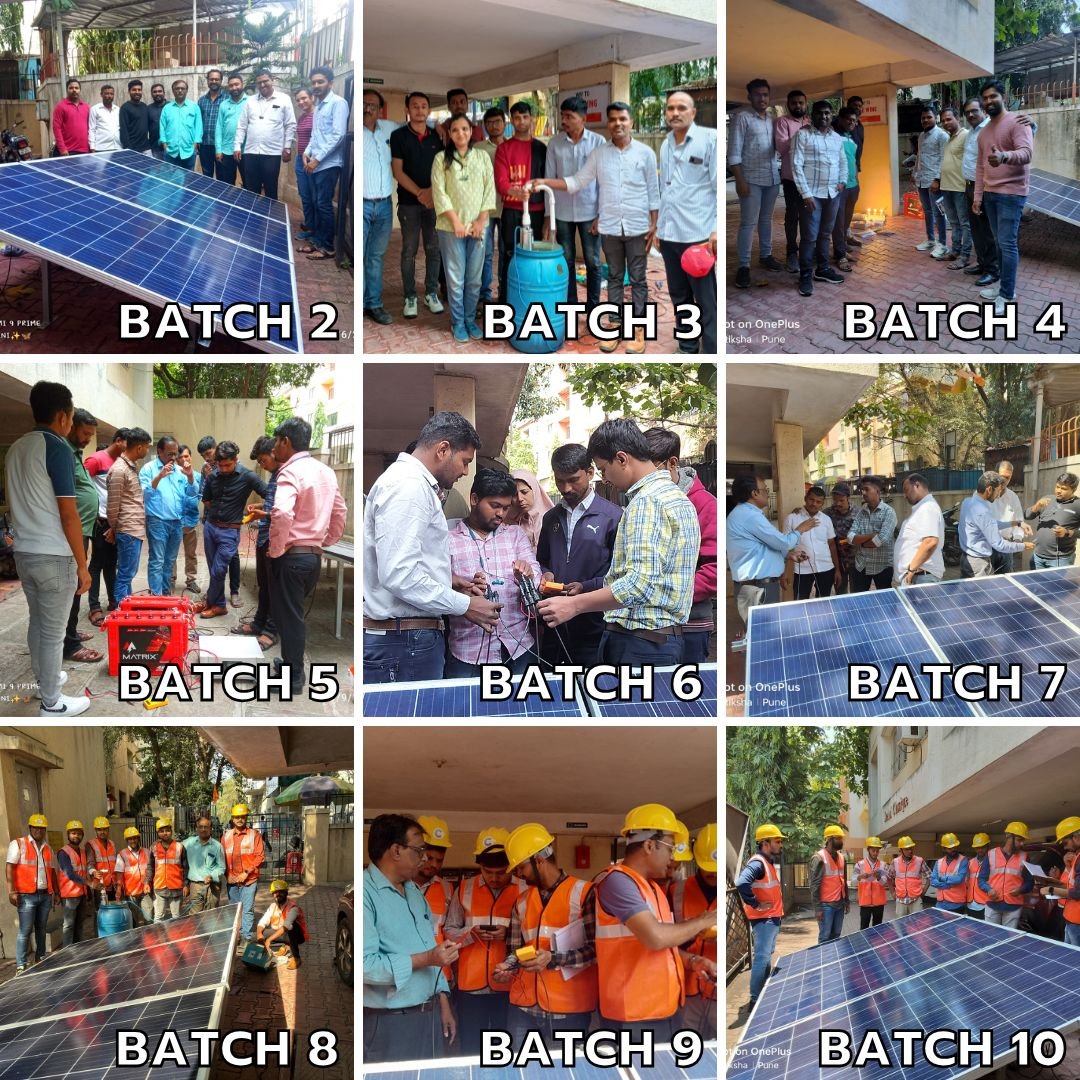
Understanding this process isn't just useful if you're installing solar for your own home — it's also one of the most in-demand skills in the solar job market right now, because every solar installer, consultant and sales professional needs to guide customers through this exact subsidy process. It's a core module in our hands-on training program.
Turn This Knowledge Into a Career or Business
Sunbliss Solar's hands-on training covers everything in this guide and more — installation, design, subsidy paperwork & business setup — with a govt-recognized certificate.
Book a Free Demo