
India's solar sector is projected to be worth over ₹1.2 lakh crore, driven by aggressive rooftop and utility-scale targets, the PM Surya Ghar Yojana, and rising electricity costs pushing both households and businesses toward solar. That growth translates directly into jobs — and unlike many tech-driven industries, most solar roles don't require a four-year engineering degree, just the right hands-on training.
Why Solar is India's Fastest-Growing Job Market
Every rooftop or ground-mount installation needs a team: someone to survey the site, someone to design the system, someone to physically install and wire it, someone to handle subsidy and net-metering paperwork, and someone to maintain it for the next 25 years. As installation volumes scale into the millions of homes under PM Surya Ghar, demand for trained solar professionals is consistently outpacing supply — especially outside the metro cities.
Top Solar Job Roles & What They Pay
| Role | What They Do | Typical Monthly Salary (India) |
|---|---|---|
| Solar Installation Technician | Mounting, wiring, and commissioning rooftop systems | ₹15,000 – ₹28,000 |
| Site Supervisor / Site Engineer | Manages installation crews and project timelines | ₹25,000 – ₹45,000 |
| Solar Design Engineer (PVsyst) | System sizing, shading analysis, yield simulation | ₹30,000 – ₹60,000 |
| O&M Engineer | Performance monitoring, fault diagnosis, maintenance | ₹22,000 – ₹40,000 |
| Solar Sales / Business Development | Client acquisition, quoting, subsidy guidance | ₹20,000 + commission |
| Independent Solar Consultant | Freelance design, audits & project consulting | Project-based, ₹15,000 – ₹1,00,000+ |
Salaries vary by city, employer size, and whether you take up a job role or start your own consultancy/installation business — many of our alumni who start independently earn considerably more than a fixed monthly salary once they build a client base.
Skills Employers Actually Look For
- Practical installation experience — employers consistently rate hands-on skill above theoretical knowledge for technician and site engineer roles.
- System design software — familiarity with tools like PVsyst for utility-scale and commercial design roles.
- Electrical fundamentals — understanding of DC/AC systems, earthing, and safety protocols.
- Subsidy & net-metering process knowledge — critical for sales and customer-facing roles, since most customers ask about the PM Surya Ghar subsidy first.
- Basic business skills — quoting, client communication, and project costing, especially if you want to grow into a supervisory or entrepreneurial role.
Certifications That Matter
A government-recognized solar certification signals to employers that you've been trained on real installations, not just theory. It also matters when applying for empanelment as a DISCOM-registered vendor if you plan to start your own installation business later.
The Fastest Path From Training to Job
- Enroll in a hands-on course covering installation, design, and business fundamentals — not just classroom theory.
- Get supervised, on-site practical experience on live rooftop and on-grid/off-grid installations.
- Build a portfolio of systems you've worked on, even small ones, to show prospective employers or clients.
- Use placement support from your training institute to connect directly with hiring solar companies.
- Consider freelance consulting alongside a job — many solar professionals in India run a side consultancy from day one.
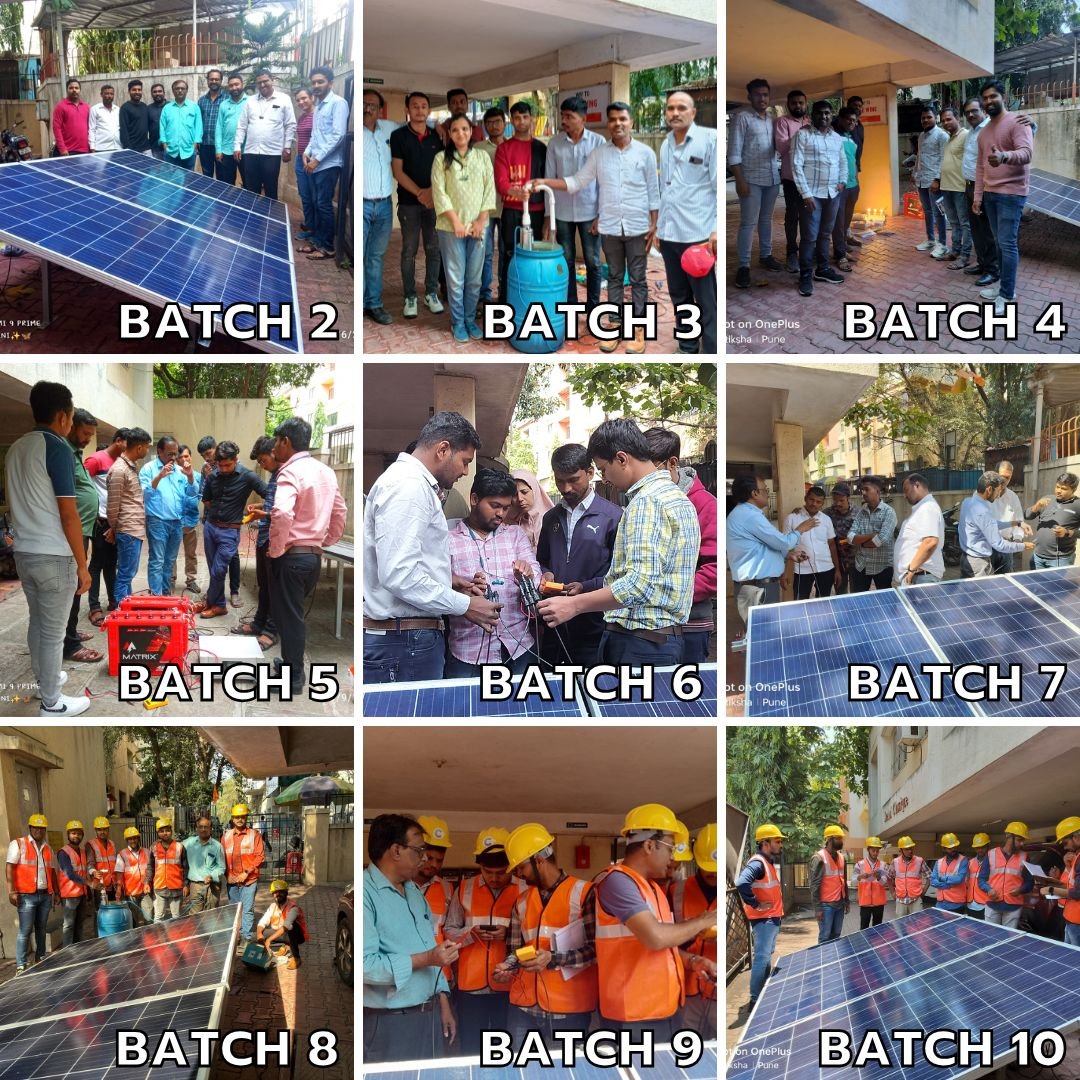
At Sunbliss, this exact path is how most of our 500+ trained students moved from zero solar knowledge to a paying job or their own solar business within months of completing the course — including dedicated placement support and interview arrangements.
Turn This Knowledge Into a Career or Business
Sunbliss Solar's hands-on training covers everything in this guide and more — installation, design, subsidy paperwork & business setup — with a govt-recognized certificate.
Book a Free Demo